Download SAP Certified Associate - SAP S-4HANA Project Systems.C_TS412_2021.Pass4Success.2026-03-30.54q.tqb
| Vendor: | SAP |
| Exam Code: | C_TS412_2021 |
| Exam Name: | SAP Certified Associate - SAP S/4HANA Project Systems |
| Date: | Mar 30, 2026 |
| File Size: | 208 KB |
How to open TQB files?
Files with TQB (Taurus Question Bank) extension can be opened by Taurus Exam Studio.
Purchase
Coupon: TAURUSSIM_20OFF
Discount: 20%
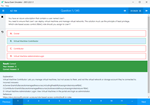
Demo Questions
Question 1
You want to exchange data between SAP Project System and Microsoft What interface do you use?
- No interface to Microsoft Project is available.
- you do not need and interface. You can exchange data using object link.
- The EPS interface (External Project Software).
- The catalog interface.
Correct answer: A
Explanation:
''The EPS interface enables you to exchange data between SAP Project System and Microsoft Project.'' Reference:2 ''The EPS interface enables you to exchange data between SAP Project System and Microsoft Project.'' Reference:2
Question 2
How can you update the degree of processing for an activity?
- By using results analysis
- By changing the activity
- By scheduling the activity
- By confirming the activity
Correct answer: D
Explanation:
To update the degree of processing for an activity, you have to confirm the activity. Confirming an activity is an action that records the actual data for an activity, such as actual start and finish dates, actual work and costs, and actual degree of processing. The degree of processing is a percentage value that indicates how much of an activity has been completed. Reference: https://help.sap.com/doc/0f069b2e08b748f1b480d4c8b46c3c49/100/en-US/6a7a9f0a6e421014e10000000a174cb4.html To update the degree of processing for an activity, you have to confirm the activity. Confirming an activity is an action that records the actual data for an activity, such as actual start and finish dates, actual work and costs, and actual degree of processing. The degree of processing is a percentage value that indicates how much of an activity has been completed. Reference: https://help.sap.com/doc/0f069b2e08b748f1b480d4c8b46c3c49/100/en-US/6a7a9f0a6e421014e10000000a174cb4.html
Question 3
What are the prerequisites for delivering materials from the project? Note: There are 2 correct answers to this question
- A delivery document type must be configured
- A sold to party is necessary
- A shipping point is necessary
- A sales order must be created in advance
Correct answer: A, C
Question 4
Which of the following factors influence the scheduling of internal processing activities? Note: There are 3 correct answers to this question
- An activated Scheduling indicator in the control key of the internal processing activity
- Whether the work for the internal activity is greater than its duration
- The unit (for example, hour, day) of the field Normal Duration field of the activity
- The relationships between activity elements
- The factory calendar in the work center used for the internal processing activity
Correct answer: A, D, E
Explanation:
The scheduling of internal processing activities is influenced by several factors, such as the control key, the activity elements, and the factory calendar. The control key is a parameter that defines the basic properties of an activity, such as whether it is internally or externally processed, whether it requires confirmation or not, and whether it is relevant for scheduling or not. The scheduling indicator in the control key determines whether an activity is included in scheduling or not. The activity elements are subordinate units of an activity that represent partial tasks or work packages. The relationships between activity elements define the logical sequence and dependencies of the partial tasks. The factory calendar is a parameter that defines the working days and holidays for a work center. The factory calendar affects the duration and dates of an activity that uses the work center. Reference: https://help.sap.com/doc/0f069b2e08b748f1b480d4c8b46c3c49/100/en-US/6a7a9f0a6e421014e10000000a174cb4.html The scheduling of internal processing activities is influenced by several factors, such as the control key, the activity elements, and the factory calendar. The control key is a parameter that defines the basic properties of an activity, such as whether it is internally or externally processed, whether it requires confirmation or not, and whether it is relevant for scheduling or not. The scheduling indicator in the control key determines whether an activity is included in scheduling or not. The activity elements are subordinate units of an activity that represent partial tasks or work packages. The relationships between activity elements define the logical sequence and dependencies of the partial tasks. The factory calendar is a parameter that defines the working days and holidays for a work center. The factory calendar affects the duration and dates of an activity that uses the work center. Reference: https://help.sap.com/doc/0f069b2e08b748f1b480d4c8b46c3c49/100/en-US/6a7a9f0a6e421014e10000000a174cb4.html
Question 5
Material
How can the system activate requirements (such as reservations or purchase requisitions)?
Note: There are 2 correct answers to this question
- Immediately, by saving the project
- Automatically, using the requirement date and the replenishment lead time
- Using a standard milestone activity
- When releasing a network or an activity
Correct answer: A, D
Explanation:
The system can activate requirements (such as reservations or purchase requisitions) in different ways, depending on the settings in customizing and master data. Some of these ways are:Immediately, by saving the project: This means that the system creates requirements for all materials assigned to WBS elements or activities as soon as you save the project. This option requires that you set the indicator ''Requirements immediately'' in customizing for your project profile.When releasing a network or an activity: This means that the system creates requirements for all materials assigned to a network or an activity when you release them. This option requires that you set the indicator ''Requirements on release'' in customizing for your network type or activity type. Reference: https://help.sap.com/docs/SAP_S4HANA_ON-PREMISE/4dd8cb7b1c484b4b93af84d00f60fdb8/79ceb65334e6b54ce10000000a174cb4.html?=1909.002 The system can activate requirements (such as reservations or purchase requisitions) in different ways, depending on the settings in customizing and master data. Some of these ways are:
Immediately, by saving the project: This means that the system creates requirements for all materials assigned to WBS elements or activities as soon as you save the project. This option requires that you set the indicator ''Requirements immediately'' in customizing for your project profile.
When releasing a network or an activity: This means that the system creates requirements for all materials assigned to a network or an activity when you release them. This option requires that you set the indicator ''Requirements on release'' in customizing for your network type or activity type. Reference: https://help.sap.com/docs/SAP_S4HANA_ON-PREMISE/4dd8cb7b1c484b4b93af84d00f60fdb8/79ceb65334e6b54ce10000000a174cb4.html?=1909.002
Question 6
Your customer has created networks with internal activities and generated capacity requirements. Now, they want to analyze the capacity requirements of their project. Which report do you recommend?
- Individual overview capacity requirements
- Capacity load work center view
- Extended capacity evaluation
- Structure overview
Correct answer: C
Explanation:
To analyze the capacity requirements of their project, you can recommend using the extended capacity evaluation report. The extended capacity evaluation report displays capacity requirements and availability for work centers or resources over a period of time. You can use various selection criteria and display options to customize the report according to your needs. You can also access detailed information on individual capacity requirements or availability situations by choosing drilldown functions. Reference: https://help.sap.com/doc/0f069b2e08b748f1b480d4c8b46c3c49/100/en-US/6a7a9f0a6e421014e10000000a174cb4.html To analyze the capacity requirements of their project, you can recommend using the extended capacity evaluation report. The extended capacity evaluation report displays capacity requirements and availability for work centers or resources over a period of time. You can use various selection criteria and display options to customize the report according to your needs. You can also access detailed information on individual capacity requirements or availability situations by choosing drilldown functions. Reference: https://help.sap.com/doc/0f069b2e08b748f1b480d4c8b46c3c49/100/en-US/6a7a9f0a6e421014e10000000a174cb4.html
Question 7
Which statements describe planned and actual revenue for WBS elements? Note: There are 2 correct answers to this question
- Planned revenue requires a sales order assigned to a WBS element
- Planned revenue can be transferred from a sales quotation
- Actual revenue is posted via a billing plan assigned to a WBS element
- Actual revenue is posted via a billing document created from a sales order
Correct answer: A, D
Explanation:
Planned revenue and actual revenue are two types of revenue for WBS elements in SAP Project System. Planned revenue requires a sales order assigned to a WBS element, which means that the sales order item contains the data for revenue planning, such as quantity, price, and billing plan. Actual revenue is posted via a billing document created from a sales order, which means that the billing document records the delivery of goods or services to a customer and requests payment for them. Reference: https://help.sap.com/doc/0f069b2e08b748f1b480d4c8b46c3c49/100/en-US/6a7a9f0a6e421014e10000000a174cb4.html Planned revenue and actual revenue are two types of revenue for WBS elements in SAP Project System. Planned revenue requires a sales order assigned to a WBS element, which means that the sales order item contains the data for revenue planning, such as quantity, price, and billing plan. Actual revenue is posted via a billing document created from a sales order, which means that the billing document records the delivery of goods or services to a customer and requests payment for them. Reference: https://help.sap.com/doc/0f069b2e08b748f1b480d4c8b46c3c49/100/en-US/6a7a9f0a6e421014e10000000a174cb4.html
Question 8
Material
Your customer uses Progress Tracking for network components and mantains dates of events manually. They need to implement scheduling of events.
What is the requisites for implement scheduling of events?
- Priority of events must be set.
- Scheduling parameters for material scheduling must be set.
- Events must be released manually.
- Event scenarios must be defined.
Correct answer: D
Explanation:
To implement scheduling of events, event scenarios must be defined. Event scenarios are predefined sets of events that describe typical sequences of activities in a project. Events are points in time that mark the start or finish of an activity or a milestone. Event scenarios can be used to schedule events automatically based on their dependencies and priorities. Event scenarios can also be used to track and monitor the progress of events in a project. Reference: https://help.sap.com/docs/SAP_S4HANA_ON-PREMISE/4dd8cb7b1c484b4b93af84d00f60fdb8/0673b65334e6b54ce10000000a174cb4.html To implement scheduling of events, event scenarios must be defined. Event scenarios are predefined sets of events that describe typical sequences of activities in a project. Events are points in time that mark the start or finish of an activity or a milestone. Event scenarios can be used to schedule events automatically based on their dependencies and priorities. Event scenarios can also be used to track and monitor the progress of events in a project. Reference: https://help.sap.com/docs/SAP_S4HANA_ON-PREMISE/4dd8cb7b1c484b4b93af84d00f60fdb8/0673b65334e6b54ce10000000a174cb4.html
Question 9
Resources
How are capacity requirements determined?
- Independent of scheduling and according to the capacity planner group.
- Using scheduling and the capacity category.
- Using the control key of an activity.
- Using scheduling and distribution key.
Correct answer: C
Explanation:
Capacity requirements are determined by using the control key of an activity. The control key is an object that defines various control parameters for an activity, such as scheduling type, confirmation type, costing relevance, or capacity requirements determination. The capacity requirements determination indicator in the control key specifies whether capacity requirements are calculated for an activity based on its work or duration. The capacity requirements are then used for capacity planning and leveling. Reference: https://help.sap.com/docs/SAP_S4HANA_ON-PREMISE/4dd8cb7b1c484b4b93af84d00f60fdb8/0673b65334e6b54ce10000000a174cb4.html Capacity requirements are determined by using the control key of an activity. The control key is an object that defines various control parameters for an activity, such as scheduling type, confirmation type, costing relevance, or capacity requirements determination. The capacity requirements determination indicator in the control key specifies whether capacity requirements are calculated for an activity based on its work or duration. The capacity requirements are then used for capacity planning and leveling. Reference: https://help.sap.com/docs/SAP_S4HANA_ON-PREMISE/4dd8cb7b1c484b4b93af84d00f60fdb8/0673b65334e6b54ce10000000a174cb4.html
Question 10
You want to set up the field selection of the Cross-Application Time Sheet (CATS) in Customizing. Which influencing field do you use?
- Network profile
- Data entry profile
- Project profile
- Network type
Correct answer: B
Explanation:
To set up the field selection of the Cross-Application Time Sheet (CATS) in Customizing, you use the data entry profile as an influencing field. CATS is a tool that allows you to record working times and tasks for project activities. The data entry profile is a parameter that defines the layout and functions of the CATS user interface. You can use the data entry profile to determine which fields are displayed or hidden, mandatory or optional, modifiable or read-only, and so on. Reference: https://help.sap.com/doc/saphelp_scm700_ehp02/7.0.2/en-US/69/f3055130534338e10000000a154ce5/content.htm To set up the field selection of the Cross-Application Time Sheet (CATS) in Customizing, you use the data entry profile as an influencing field. CATS is a tool that allows you to record working times and tasks for project activities. The data entry profile is a parameter that defines the layout and functions of the CATS user interface. You can use the data entry profile to determine which fields are displayed or hidden, mandatory or optional, modifiable or read-only, and so on. Reference: https://help.sap.com/doc/saphelp_scm700_ehp02/7.0.2/en-US/69/f3055130534338e10000000a154ce5/content.htm
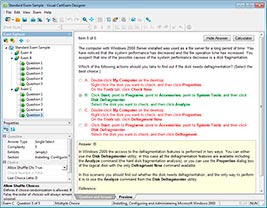
HOW TO OPEN VCE FILES
Use VCE Exam Simulator to open VCE files
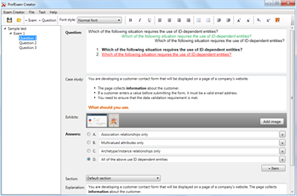
HOW TO OPEN VCEX FILES
Use ProfExam Simulator to open VCEX files
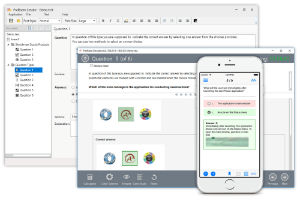
ProfExam at a 20% markdown
You have the opportunity to purchase ProfExam at a 20% reduced price
Get Now!