Download GitHub Advanced Security.GH-500.Actual4Test.2026-05-21.31q.vcex
| Vendor: | Microsoft |
| Exam Code: | GH-500 |
| Exam Name: | GitHub Advanced Security |
| Date: | May 21, 2026 |
| File Size: | 295 KB |
How to open VCEX files?
Files with VCEX extension can be opened by ProfExam Simulator.
Purchase
Coupon: TAURUSSIM_20OFF
Discount: 20%
Demo Questions
Question 1
When using CodeQL, how does extraction for compiled languages work?
- By generating one language at a time
- By resolving dependencies to give an accurate representation of the codebase
- By monitoring the normal build process
- By running directly on the source code
Correct answer: C
Explanation:
For compiled languages, CodeQL performs extraction by monitoring the normal build process. This means it watches your usual build commands (like make, javac, or dotnet build) and extracts the relevant data from the actual build steps being executed. CodeQL uses this information to construct a semantic database of the application.This approach ensures that CodeQL captures a precise, real-world representation of the code and its behavior as it is compiled, including platform-specific configurations or conditional logic used during build. For compiled languages, CodeQL performs extraction by monitoring the normal build process. This means it watches your usual build commands (like make, javac, or dotnet build) and extracts the relevant data from the actual build steps being executed. CodeQL uses this information to construct a semantic database of the application.
This approach ensures that CodeQL captures a precise, real-world representation of the code and its behavior as it is compiled, including platform-specific configurations or conditional logic used during build.
Question 2
You are managing code scanning alerts for your repository. You receive an alert highlighting a problem with data flow. What do you click for additional context on the alert?
- Show paths
- Code scanning alerts
- Security
Correct answer: A
Explanation:
When dealing with a data flow issue in a code scanning alert, clicking on "Show paths" provides a detailed view of the data's journey through the code. This includes the source of the data, the path it takes, and where it ends up (the sink). This information is crucial for understanding how untrusted data might reach sensitive parts of your application and helps in identifying where to implement proper validation or sanitization. When dealing with a data flow issue in a code scanning alert, clicking on "Show paths" provides a detailed view of the data's journey through the code. This includes the source of the data, the path it takes, and where it ends up (the sink). This information is crucial for understanding how untrusted data might reach sensitive parts of your application and helps in identifying where to implement proper validation or sanitization.
Question 3
Which of the following benefits do code scanning, secret scanning, and dependency review provide?
- Confidentially report security vulnerabilities and privately discuss and fix security vulnerabilities in your repository's code.
- Search for potential security vulnerabilities, detect secrets, and show the full impact of changes to dependencies.
- Automatically raise pull requests, which reduces your exposure to older versions of dependencies.
- View alerts about dependencies that are known to contain security vulnerabilities.
Correct answer: B
Question 4
Which of the following is the most proactive and practical way to prevent new secret scanning alerts?
- Scan for non-provider patterns
- Use feature branches
- Configure a secret scanning Actions workflow.
- Enable push protection.
Correct answer: D
Explanation:
To prevent new secret scanning alerts, enable push protection to block secrets from being committed in the first place, and manage push protection patterns to disable blocking for specific, low-risk secret types or false positives.Enable Push ProtectionPrevent new commits: Push protection proactively scans code for secrets before they are pushed to a repository. If a secret is detected, the push is blocked, providing immediate feedback to developers and preventing secrets from entering the codebase.Configure patterns: You can configure which secret patterns are blocked at the organization or enterprise level. By disabling patterns that frequently generate false positives, you can reduce the number of new alerts. To prevent new secret scanning alerts, enable push protection to block secrets from being committed in the first place, and manage push protection patterns to disable blocking for specific, low-risk secret types or false positives.
Enable Push Protection
Prevent new commits: Push protection proactively scans code for secrets before they are pushed to a repository. If a secret is detected, the push is blocked, providing immediate feedback to developers and preventing secrets from entering the codebase.
Configure patterns: You can configure which secret patterns are blocked at the organization or enterprise level. By disabling patterns that frequently generate false positives, you can reduce the number of new alerts.
Question 5
You are configuring code scanning with CodeQL. What is one impact of using a language matrix in your workflow?
- CodeQL is configured to run analysis sequentially.
- CodeQL will only analyze the languages in the matrix.
- CodeQL excludes alerts for those dependencies specified in the language matrix.
- You can use the languages parameter under the init action.
Correct answer: B
Explanation:
If your workflow uses the language matrix, then CodeQL will only analyze the languages in the matrix.Note:The default CodeQL analysis workflow file created after configuring advanced setup for code scanning with CodeQL defines a matrix containing a property named language which lists the languages in your repository that will be analyzed. This matrix has been automatically pre- populated with supported languages detected in your repository. Using the language matrix allows CodeQL to run each language analysis in parallel and to customize analysis for each language. In an individual analysis, the name of the language from the matrix is provided to the init action as the argument for the languages input. We recommend that all workflows adopt this configuration.Incorrect:[Not A]Using the language matrix allows CodeQL to run each language analysis in parallel. If your workflow uses the language matrix, then CodeQL will only analyze the languages in the matrix.
Note:
The default CodeQL analysis workflow file created after configuring advanced setup for code scanning with CodeQL defines a matrix containing a property named language which lists the languages in your repository that will be analyzed. This matrix has been automatically pre- populated with supported languages detected in your repository. Using the language matrix allows CodeQL to run each language analysis in parallel and to customize analysis for each language. In an individual analysis, the name of the language from the matrix is provided to the init action as the argument for the languages input. We recommend that all workflows adopt this configuration.
Incorrect:
[Not A]
Using the language matrix allows CodeQL to run each language analysis in parallel.
Question 6
Where in the repository can you give additional users access to secret scanning alerts?
- Secrets
- Insights
- Settings
- Security
Correct answer: C
Explanation:
About access management for repositoriesFor each repository that you administer on GitHub, you can see an overview of every team or person with access to the repository. From the overview, you can also invite new teams or people, change each team or person's role for the repository, or remove access to the repository.This overview can help you audit access to your repository, onboard or off-board contractors or employees, and effectively respond to security incidents.Inviting a team or person1. On GitHub, navigate to the main page of the repository.2. Under your repository name, click Settings. If you cannot see the "Settings" tab, select the dropdown menu, then click Settings. 3. In the "Access" section of the sidebar, click Collaborators & teams.4.To the right of "Manage access", click Add people or Add teams.5. In the search field, start typing the name of the team or person to invite, then click a name in the list of matches.6. Under "Choose a role", select the repository role to grant to the team or person, then click Add NAME to REPOSITORY. About access management for repositories
For each repository that you administer on GitHub, you can see an overview of every team or person with access to the repository. From the overview, you can also invite new teams or people, change each team or person's role for the repository, or remove access to the repository.
This overview can help you audit access to your repository, onboard or off-board contractors or employees, and effectively respond to security incidents.
Inviting a team or person
1. On GitHub, navigate to the main page of the repository.
2. Under your repository name, click Settings. If you cannot see the "Settings" tab, select the dropdown menu, then click Settings.

3. In the "Access" section of the sidebar, click Collaborators & teams.
4.To the right of "Manage access", click Add people or Add teams.
5. In the search field, start typing the name of the team or person to invite, then click a name in the list of matches.
6. Under "Choose a role", select the repository role to grant to the team or person, then click Add NAME to REPOSITORY.
Question 7
After looking into an injection code scanning alert, you notice that the input is properly sanitized with custom logic. Which of the following is the next step?
- Dismiss the alert with the reason "false positive."
- Ignore the alert.
- Open an issue in the CodeQL repository.
- Draft a pull request to update the open source query.
Correct answer: A
Explanation:
Dismissing alertsThere are two ways of closing an alert. You can fix the problem in the code, or you can dismiss the alert.Dismissing an alert is a way of closing an alert that you don't think needs to be fixed. For example, an error in code that's used only for testing, or when the effort of fixing the error is greater than the potential benefit of improving the code. You can dismiss alerts from code scanning annotations in code, or from the summary list within the Security tab.If you dismiss a CodeQL alert as a false positive result, for example because the code uses a sanitization library that isn't supported, consider contributing to the CodeQL repository and improving the analysis. Dismissing alerts
There are two ways of closing an alert. You can fix the problem in the code, or you can dismiss the alert.
Dismissing an alert is a way of closing an alert that you don't think needs to be fixed. For example, an error in code that's used only for testing, or when the effort of fixing the error is greater than the potential benefit of improving the code. You can dismiss alerts from code scanning annotations in code, or from the summary list within the Security tab.
If you dismiss a CodeQL alert as a false positive result, for example because the code uses a sanitization library that isn't supported, consider contributing to the CodeQL repository and improving the analysis.
Question 8
How would you build your code within the CodeQL analysis workflow? Each answer presents a complete solution. (Choose two.)
- Upload compiled binaries.
- Use CodeQL's autobuild action.
- Use jobs.analyze.runs-on.
- Use CodeQL's init action.
- Ignore paths.
- Implement custom build steps.
Correct answer: B, D
Explanation:
[B] Build ModesThe CodeQL Action supports different build modes for analyzing the source code. The available build modes are:none: The database will be created without building the source code. Available for all interpreted languages and some compiled languages.*-> autobuild: The database will be created by attempting to automatically build the source code.Available for all compiled languages.manual: The database will be created by building the source code using a manually specified build command. To use this build mode, specify manual build steps in your workflow between the init and analyze steps. Available for all compiled languages.[D] ActionsThis repository contains several actions that enable you to analyze code in your repository using CodeQL and upload the analysis to GitHub Code Scanning. Actions in this repository also allow you to upload to GitHub analyses generated by any SARIF-producing SAST tool.Actions for CodeQL analyses:*-> init: Sets up CodeQL for analysis.analyze: Finalizes the CodeQL database, runs the analysis, and uploads the results to Code Scanning. [B] Build Modes
The CodeQL Action supports different build modes for analyzing the source code. The available build modes are:
none: The database will be created without building the source code. Available for all interpreted languages and some compiled languages.
*-> autobuild: The database will be created by attempting to automatically build the source code.
Available for all compiled languages.
manual: The database will be created by building the source code using a manually specified build command. To use this build mode, specify manual build steps in your workflow between the init and analyze steps. Available for all compiled languages.
[D] Actions
This repository contains several actions that enable you to analyze code in your repository using CodeQL and upload the analysis to GitHub Code Scanning. Actions in this repository also allow you to upload to GitHub analyses generated by any SARIF-producing SAST tool.
Actions for CodeQL analyses:
*-> init: Sets up CodeQL for analysis.
analyze: Finalizes the CodeQL database, runs the analysis, and uploads the results to Code Scanning.
Question 9
What role is required to change a repository's code scanning severity threshold that fails a pull request status check?
- Maintain
- Write
- Triage
- Admin
Correct answer: D
Explanation:
To change the threshold that defines whether a pull request fails due to code scanning alerts (such as blocking merges based on severity), the user must have Admin access on the repository. This is because modifying these settings falls under repository configuration privileges.Users with Write, Maintain, or Triage roles do not have the required access to modify rulesets or status check policies. To change the threshold that defines whether a pull request fails due to code scanning alerts (such as blocking merges based on severity), the user must have Admin access on the repository. This is because modifying these settings falls under repository configuration privileges.
Users with Write, Maintain, or Triage roles do not have the required access to modify rulesets or status check policies.
Question 10
You have enabled security updates for a repository. When does GitHub mark a Dependabot alert as resolved for that repository?
- When Dependabot creates a pull request to update dependencies
- When you dismiss the Dependabot alert
- When the pull request checks are successful
- When you merge a pull request that contains a security update
Correct answer: D
Explanation:
A Dependabot alert is marked as resolved only after the related pull request is merged into the repository. This indicates that the vulnerable dependency has been officially replaced with a secure version in the active codebase.Simply generating a PR or passing checks does not change the alert status; merging is the key step. A Dependabot alert is marked as resolved only after the related pull request is merged into the repository. This indicates that the vulnerable dependency has been officially replaced with a secure version in the active codebase.
Simply generating a PR or passing checks does not change the alert status; merging is the key step.
Question 11
How do I configure a webhook to monitor key scan alert events? What are the steps of this operation?
- Dismiss alerts that are older than 90 days.
- Configure a webhook to monitor for secret scanning alert events.
- Enable system for cross-domain identity management (SCIM) provisioning for the enterprise.
- Document alternatives to storing secrets in the source code.
Correct answer: B, D
Explanation:
To proactively address secret scanning:Webhooks can be configured to listen for secret scanning events. This allows automation, logging, or alerting in real-time when secrets are detected.Documenting secure development practices (like using environment variables or secret managers) helps reduce the likelihood of developers committing secrets in the first place.Dismissal based on age is not a best practice without triage. SCIM deals with user provisioning, not scanning alerts. To proactively address secret scanning:
Webhooks can be configured to listen for secret scanning events. This allows automation, logging, or alerting in real-time when secrets are detected.
Documenting secure development practices (like using environment variables or secret managers) helps reduce the likelihood of developers committing secrets in the first place.
Dismissal based on age is not a best practice without triage. SCIM deals with user provisioning, not scanning alerts.
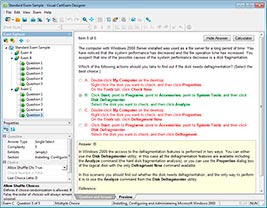
HOW TO OPEN VCE FILES
Use VCE Exam Simulator to open VCE files
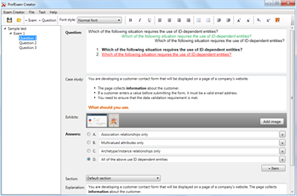
HOW TO OPEN VCEX FILES
Use ProfExam Simulator to open VCEX files
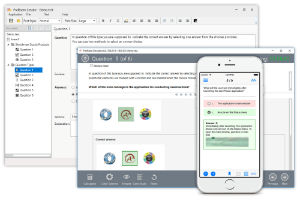
ProfExam at a 20% markdown
You have the opportunity to purchase ProfExam at a 20% reduced price
Get Now!