Download Professional Security Operations Engineer.Professional_Security_Operations_Engineer.ExamTopics.2026-04-09.29q.vcex
| Vendor: | |
| Exam Code: | Professional_Security_Operations_Engineer |
| Exam Name: | Professional Security Operations Engineer |
| Date: | Apr 09, 2026 |
| File Size: | 146 KB |
How to open VCEX files?
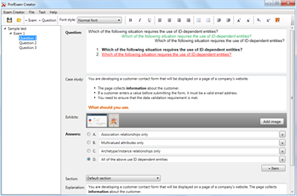
Files with VCEX extension can be opened by ProfExam Simulator.
Purchase
Coupon: TAURUSSIM_20OFF
Discount: 20%
Demo Questions
Question 1
You are a SOC analyst working a case in Google Security Operations (SecOps). The case contains a file hash that your playbooks have automatically enriched with VirusTotal context and categorized as likely malicious. You need to quickly identify devices and users in your organization who have interacted with this file. What should you do?
- Build a playbook to perform a UDM search matching on the file hash in Google SecOps SIEM.
- Build a playbook to query your threat intelligence platform (TIP) for the presence of the file hash.
- Use a manual action in Google SecOps SOAR to perform a UDM search matching on the file hash in Google SecOps SIEM.
- Use a manual action in Google SecOps SOAR to query your threat intelligence platform (TIP) for the presence of the file hash.
Correct answer: C
Question 2
You are a SOC analyst at an organization that uses Google Security Operations (SecOps). You are investigating suspicious activity in your organization's environment. Alerts in Google SecOps indicate repeated PowerShell activity on a set of endpoints. Outbound connections are made to a domain that does not appear in your threat intelligence feeds. The activity occurs across multiple systems and user accounts. You need to search across impacted systems and user identities to identify the malicious user and understand the scope of the compromise. What should you do?
- Perform a YARA-L 2.0 search to correlate activity across impacted systems and users.
- Perform a raw log search for the suspicious domain string, and manually pivot to related user activity.
- Use the User Sign-In Overview dashboard to monitor authentication trends and anomalies across all users.
- Use the Behavioral Analytics dashboard in Risk Analytics to identify abnormal IP-based activity and high-risk user behavior.
Correct answer: A
Question 3
You are responsible for selecting and prioritizing potential sources of data to integrate with Google Security Operations (SecOps). Your company has recently started using several Google Cloud services to increase security in its Google Cloud organization. You need to determine which logs should be ingested into Google SecOps to reduce the effort required to write detections. What should you do?
- Ingest Google Cloud Armor logs by using Cloud Logging.
- Deploy a Bindplane agent to ingest event logs from Compute Engine VMs that provide endpoint visibility.
- Integrate Security Command Center (SCC) into Google SecOps to ingest logs originating from the Google Cloud services.
- Use Google Threat Intelligence to gain insight about threat group behavior and support threat hunting activities.
Correct answer: C
Question 4
During a high-priority phishing incident at your company, Google Security Operations (SecOps) created and assigned the case to a Tier 1 analyst. The analyst added email headers and attached the malicious file as evidence but failed to escalate the case, violating an internal SLA of 30 minutes for a phishing response. The delay led to multiple users opening the file before containment actions were initiated. You want to optimize the case management workflow for future high-priority incidents. What should you do?
- Build a playbook that automatically ingests reported phishing emails, enriches entities with threat intelligence, determines the impact and assigns the case for review.
- Change the default case assignment logic to route all phishing alerts to the Tier 2 team.
- Configure a SOAR notification loop that sends escalating email alerts to the Tier 1 analysts, the Tier 2 analysts, and the SOC manager every five minutes until the case is manually reassigned.
- Update the playbook to automatically close phishing cases after 60 minutes if no manual response has occurred.
Correct answer: A
Question 5
You are planning log onboarding for a Google Security Operations (SecOps) SIEM deployment in a cloud-heavy enterprise environment. The detection engineering team is requesting log sources that support visibility into:
- User identity behavior
- Lateral movement
- Privilege escalation attempts
You need to determine which telemetry sources are ingested first. Which log source should you prioritize?
- Cloud access security broker (CASB) logs
- EDR logs
- IAM logs
- Network firewall logs
Correct answer: B
Question 6
You use Google Security Operations (SecOps) curated detections and YARA-L rules to detect suspicious activity on Windows endpoints. Your source telemetry uses EDR and Windows Events logs. Your rules match on the principal.user.userid UDM field. You need to ingest an additional log source for this field to match all possible log entries from your EDR and Windows Event logs. What should you do?
- Ingest logs from Windows Sysmon.
- Ingest logs from Microsoft Entra ID.
- Ingest logs from Windows PowerShell.
- Ingest logs from Windows Procmon.
Correct answer: A
Question 7
Your company's risk management and compliance team requires regular reporting on compliance with industry standard control frameworks for a regulated business unit that continuously adds projects. You need to create a report that includes evidence of non-compliant resources found in this environment. How should you generate this report?
- Run an audit using the compliance framework in Audit Manager. Export the evaluation for consumption by the second-line team.
- Run queries for the required controls using the Cloud Asset Inventory data stored in BigQuery. Schedule this report to run regularly.
- Implement the control framework using Rego, and deploy this framework in Workload Manager. Schedule a regular report in Workload Manager.
- Implement the built-in posture for the compliance framework within the Security Command Center (SCC) posture.
Correct answer: D
Question 8
You are receiving security alerts from multiple connectors in your Google Security Operations (SecOps) instance. You need to identify which IP address entities are internal to your network and label each entity with its specific network name. This network name will be used as the trigger for the playbook. What should you do?
- Configure each network in the Google SecOps SOAR settings.
- Enrich the IP address entities as the initial step of the playbook.
- Modify the entity attribute in the alert overview.
- Create an outcome variable in the rule to assign the network name.
Correct answer: B
Question 9
You are responsible for managing threat intelligence and IOC lists in your organization. You have compiled a list of IOCs from recent incidents. You want to quickly and efficiently share the IOCs with other teams for collaboration and integration into their operational processes. What should you do?
- Create a list in Google Security Operations (SecOps), and grant the required access to the other teams.
- Export the IOCs from Google Threat Intelligence in CSV or JSON format, and email the file to the other teams.
- Add the IOCs to a collection in Google Threat Intelligence, and share the collection with the other teams.
- Create a new threat graph in Google Threat Intelligence, and share the graph with the other teams.
Correct answer: A
Question 10
Your organization plans to ingest logs from an on-premises MySQL database as a new log source into its Google Security Operations (SecOps) instance. You need to create a solution that minimizes effort. What should you do?
- Configure a third-party API feed in Google SecOps.
- Configure direct ingestion from your Google Cloud organization.
- Configure and deploy a Google SecOps forwarder.
- Configure and deploy a Bindplane collection agent.
Correct answer: C
Question 11
Your organization is a Google Security Operations (SecOps) customer. The compliance team requires a weekly export of case resolutions and SLA metrics of high and critical severity cases over the past week. The compliance team's post-processing scripts require this data to be formatted as tabular data in CSV files, zipped, and delivered to their email each Monday morning. What should you do?
- Generate a report in SOAR Reports, and schedule delivery of the report.
- Use statistics in search, and configure a Google SecOps SOAR job to format and send the report.
- Build an Advanced Report in SOAR Reports, and schedule delivery of the report.
- Build a detection rule with outcomes, and configure a Google SecOps SOAR job to format and send the report.
Correct answer: B
HOW TO OPEN VCE FILES
Use VCE Exam Simulator to open VCE files
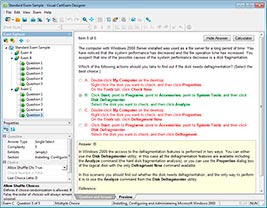
HOW TO OPEN VCEX FILES
Use ProfExam Simulator to open VCEX files
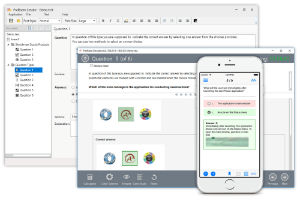
ProfExam at a 20% markdown
You have the opportunity to purchase ProfExam at a 20% reduced price
Get Now!